
Dr Hanzala Ahmed
Dr Hanzala Ahmed is a Senior Lecturer at the National University of Sciences and Technology (NUST) with an MSCS in Artificial Intelligence and Data Science from Mohammad Ali Jinnah University.
He also holds a Master’s in Computer Science from Karachi University and certifications in Graph Theory and research paper writing. Students can ask Quick Assignment Help about AI, Data Science and research writing support.
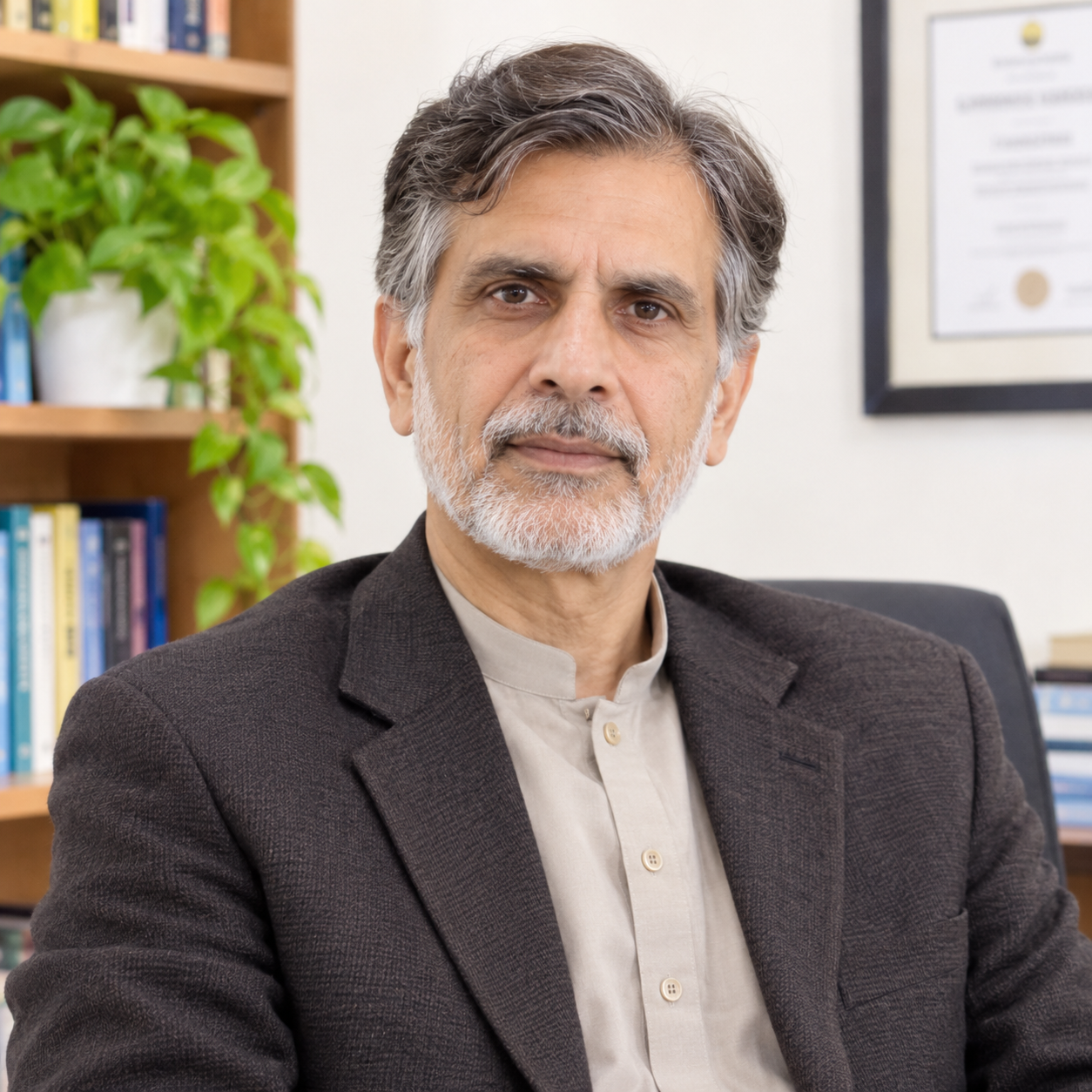
- Current role
- Senior Lecturer, Computer Science
- Institution
- National University of Sciences and Technology (NUST)
- Qualification
- MSCS, AI and Data Science (MAJU)
- Focus
- AI, Data Science, Graph Theory, Research Writing
About Dr Hanzala Ahmed
Dr Hanzala Ahmed is a Computer Science academic with postgraduate specialisation in Artificial Intelligence and Data Science. He completed an MSCS at Mohammad Ali Jinnah University (MAJU) between August 2022 and June 2025, and earlier earned a Master’s in Computer Science at Karachi University (1999 to 2001).
His profile lists a Senior Lecturer role at the National University of Sciences and Technology (NUST), with Higher Education Teaching and University Lecturing among his skills.
In November 2025 he added certifications in Introduction to Graph Theory and How to Write a Research Paper, which reflect an interest in mathematical foundations and clear research communication.
Academic Qualifications
Education history listed on this profile.
| Qualification | Institution | Period |
|---|---|---|
| MSCS, Artificial Intelligence and Data Science | Mohammad Ali Jinnah University (MAJU) | August 2022 – June 2025 |
| Master’s Degree, Computer Science | Karachi University | 1999 – 2001 |
Profile details are based on information supplied by the expert. Availability for a specific request is confirmed by our team.
Professional Background
Senior Lecturer
Higher education teaching and university lecturing in Computer Science.
Main Areas of Academic Expertise
Subject areas drawn from this profile.
Computer Science
Computing principles, theory and the foundations of computer-based systems.
Artificial Intelligence
AI concepts, intelligent systems and the principles behind AI applications.
Data Science
Data analysis, interpretation and analytical thinking.
Graph Theory
Vertices, edges, paths and graph structures as mathematical models.
Academic Research Writing
Research paper organisation, structure and clear presentation of ideas.
Higher Education Teaching
University-level lecturing and explaining difficult technical ideas step by step.
AI, Machine Learning and Data Science Compared
These three fields overlap but have different aims. Students often mix them up in assignments.
| Field | Main focus | Typical example |
|---|---|---|
| Artificial Intelligence | Building systems that perform tasks associated with human intelligence | Virtual assistants, recommendation engines |
| Machine Learning | Methods that let systems learn patterns from data | Spam filters, price prediction models |
| Data Science | Extracting insight from data through analysis and modelling | Sales trend analysis, customer segmentation |
Machine Learning is a subfield of Artificial Intelligence. Data Science is broader and uses statistics, programming and machine learning to answer questions with data.
A Typical Data Science Workflow
Most Data Science projects and assignments follow the same path.
- 01
Define
State the problem and the question the data must answer.
- 02
Collect
Gather relevant data from reliable sources.
- 03
Clean
Fix missing values, errors and inconsistencies.
- 04
Model
Explore the data and apply suitable methods.
- 05
Communicate
Evaluate results and present findings clearly.
Graph Theory Basics
Graph Theory studies networks of connected points and appears in algorithms, routing and social network analysis.
| Concept | Meaning | Where it is used |
|---|---|---|
| Vertices and edges | Points in a graph and the links between them | Modelling any network |
| Paths and cycles | Routes through a graph, and routes that return to the start | Shortest-path and routing problems |
| Trees | Connected graphs with no cycles | Data structures, spanning trees |
| Connectivity | Whether and how vertices can reach each other | Network reliability |
| Graph colouring | Assigning labels so neighbours differ | Scheduling and timetabling |
Structure of a Research Paper
A well-organised paper helps readers follow the problem, method and findings.
| Component | Purpose |
|---|---|
| Abstract | A concise overview of the research |
| Introduction | Introduces the topic and problem |
| Literature review | Examines relevant existing research |
| Methodology | Explains the approach and methods |
| Results | Presents the findings |
| Discussion | Interprets the findings |
| Conclusion | Summarises the main outcomes |
| References | Acknowledges the sources used |
Licences and Certifications
Certifications listed on this profile.
Introduction to Graph Theory
University of California San Diego / Higher School of Economics
Issued: November 2025
Credential ID: J0JX6BPCIJCN
How to Write a Research Paper
Higher Education Commission, Pakistan
Issued: November 2025
Credential ID: 7FWHJWZPO6R7
How Quick Assignment Help Supports Computer Science and Data Science Students
Share your topic and requirements with our team to find out what support is available.
Concept explanations
Step-by-step explanations of AI, algorithms, data analysis and theory topics.
Research planning
Help shaping research questions, choosing methods and structuring a paper.
Feedback and referencing
Feedback on clarity, technical writing, structure and referencing.
Materials are research-based reference work to support learning. Follow your institution’s academic integrity policy, acknowledge sources and adapt any material to its requirements.
Questions About Dr Hanzala Ahmed
Short answers about this profile and the subject area.
What is Dr Hanzala Ahmed's specialisation?
Dr Hanzala Ahmed specialises in Artificial Intelligence and Data Science within Computer Science. His MSCS from Mohammad Ali Jinnah University lists both as his specialisation.
What are Dr Hanzala Ahmed's qualifications?
His profile lists an MSCS in Artificial Intelligence and Data Science from Mohammad Ali Jinnah University (2022 to 2025) and a Master’s in Computer Science from Karachi University (1999 to 2001).
What is his current role?
His profile lists him as a Senior Lecturer at the National University of Sciences and Technology (NUST).
What is the difference between AI, Machine Learning and Data Science?
Artificial Intelligence builds systems that perform tasks linked to human intelligence. Machine Learning is a subfield of AI where systems learn patterns from data. Data Science is broader and extracts insight from data using analysis, statistics and modelling.
What is Graph Theory?
Graph Theory is the mathematical study of networks made of vertices (points) and edges (links). It is used in routing, scheduling, social networks and many algorithms.
What certifications does he hold?
His profile lists Introduction to Graph Theory and How to Write a Research Paper, both issued in November 2025.
What is included with Quick Assignment Help support?
Every project includes a free plagiarism report and AI report, plus unlimited revisions until you are satisfied, according to your requirements. Materials are reference work to be adapted to your university’s rules.
How do I ask about Computer Science or Data Science support?
Message us on WhatsApp with your topic, tools or language, level, deadline and marking criteria. Our team reviews the brief and confirms the right support and a quote before you decide.
Explore More
Other academic experts
Quick Assignment Help services
Need Help With Computer Science, AI or Data Science?
Share your subject, programming language or tools, level and deadline. Our team will review your brief and confirm the right support before you decide.
Chat With Our Team on WhatsApp