
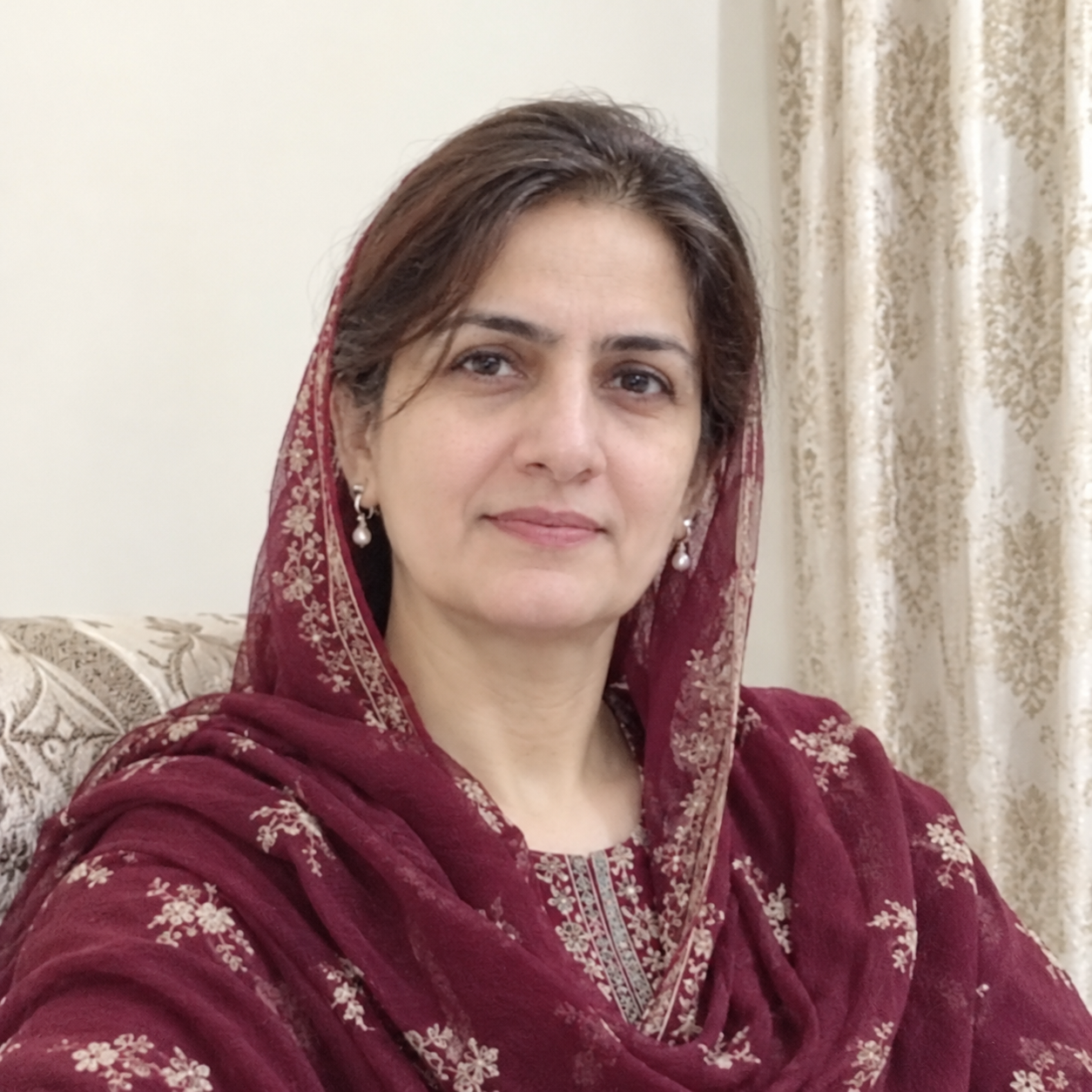
Prof. Aatiqah Noor
Prof. Aatiqah Noor is Professor of Biochemistry and Principal at Dow International Medical College, Dow University of Health Sciences, with a focus on medical education and basic health sciences.
She teaches M.Phil, PhD and MDS programmes and has worked on curriculum development, problem-based learning and quality management. Students can ask Quick Assignment Help about Biochemistry and medical sciences support related to this background.
- Current role
- Principal & Professor of Biochemistry
- Institution
- Dow International Medical College, Dow University of Health Sciences
- Qualification
- MBBS · PhD (Biochemistry)
- Focus
- Medical Biochemistry and Medical Education
About Prof. Aatiqah Noor
Prof. Aatiqah Noor is a medical academic whose work combines Biochemistry teaching, medical education and institutional leadership. She holds an MBBS from Sind Medical College (1987 to 1992) and a PhD in Biochemistry, and has served as Professor of Biochemistry at Dow International Medical College since August 2012.
In May 2022 she became Principal of the college. Her listed responsibilities include teaching postgraduate programmes, curriculum planning, problem-based learning, academic coordination and quality management.
This background is why students of medicine, nursing, pharmacy and allied health sciences ask our team about Biochemistry, basic health sciences and medical education topics.
Academic Qualifications
Education history listed on this profile.
| Qualification | Institution | Period |
|---|---|---|
| Bachelor of Medicine and Bachelor of Surgery (MBBS) | Sind Medical College | 1987 – 1992 |
| PhD, Medicine and Surgery / Biochemistry | Karachi University | Completion year on request |
Profile details are based on information supplied by the expert. Availability for a specific request is confirmed by our team.
Professional Experience and Academic Leadership
Principal
Leads the college academically and administratively, with stated objectives of improving institutional procedures and organisational operations.
Professor of Biochemistry
Teaches M.Phil, PhD and MDS programmes and contributes to medical education and curriculum development.
Responsibilities also include laboratory and library modernisation, problem-based learning, multimedia teaching resources, academic scheduling and quality management (including the role of Chief QMS Coordinator and an appointment as Director Student Affairs).
Main Areas of Academic Expertise
Subject areas drawn from this profile.
Medical Biochemistry
The chemistry of living systems: biomolecules, enzymes and metabolism, studied for their clinical relevance.
Basic Health Sciences
Foundational medical science concepts that support the study of human health and disease.
Medical Teaching and Learning
Teaching approaches, assessment and educational methods used in medical institutions.
Curriculum Development
Planning, scheduling and implementing basic health science curricula.
Problem-Based Learning
Case-led learning that builds reasoning and independent study skills.
Academic Administration
Institutional coordination, student affairs and quality management in higher education.
Core Topics in Medical Biochemistry
Medical Biochemistry links molecular processes to health and disease. These are the areas students most often ask about.
| Topic | What students study | Why it matters |
|---|---|---|
| Carbohydrate metabolism | Glycolysis, gluconeogenesis, glycogen metabolism, HMP shunt | How cells release energy and regulate blood glucose |
| Protein and amino acid biochemistry | Amino acid structure, protein folding, urea cycle, amino acid metabolism | Links protein structure to function and metabolic disorders |
| Enzymology | Enzyme kinetics, inhibition, regulation, clinical enzymes | Explains how reactions are controlled and used in diagnosis |
| Lipid metabolism | Fatty acid oxidation, ketone bodies, cholesterol, lipoproteins | Connects lipid pathways to cardiovascular and metabolic disease |
| Bioenergetics | TCA cycle, electron transport chain, oxidative phosphorylation | Shows how ATP is produced |
| Nucleic acids and molecular biology | DNA replication, transcription, translation, mutation | Explains genetic information and inherited disease |
| Vitamins and minerals | Fat- and water-soluble vitamins, trace elements, deficiency states | Links nutrition to biochemical function |
| Clinical biochemistry | Diabetes, lipid disorders, inborn errors of metabolism | Applies laboratory biochemistry to patient care |
Understanding Important Biomolecules
Each major class of biomolecule has a distinct structure and role. Knowing the differences is the base of most Biochemistry coursework.
Carbohydrates
A main energy source. Glucose feeds glycolysis and the pathways that follow it.
Proteins
Structural support, transport, signalling and enzyme activity.
Lipids
Cell membrane structure, energy storage and signalling molecules.
Nucleic acids
DNA and RNA store, transmit and use genetic information.
Enzymes
Biological catalysts that speed up reactions without being consumed.
Vitamins
Essential micronutrients that support metabolic and physiological processes.
Medical Teaching Methods Students Meet
Medical education asks students to apply knowledge, not only recall it. Common methods include:
| Method | How it works | Learning aim |
|---|---|---|
| Problem-based learning | Students work through structured clinical or scientific problems | Analytical thinking and self-directed study |
| Lectures | Teachers explain and organise key concepts | Foundational subject knowledge |
| Multimedia learning | Concepts shown with digital visuals and animations | Clearer understanding of complex pathways |
| Curriculum-based learning | Subjects arranged into a planned framework | Structured progression |
| Independent learning | Students use resources to extend their understanding | Self-directed study habits |
How Quick Assignment Help Supports Biochemistry and Medical Students
Share your topic and requirements with our team to find out what support is available.
Concept explanations
Clear explanations of pathways, molecules and basic health science concepts, with examples.
Research and structure
Help shaping a research question, organising sources and building a structured explanation.
Feedback and referencing
Feedback on structure, scientific terminology and referencing before you submit.
Materials are research-based reference work to support learning. Follow your institution’s academic integrity policy and adapt any material to its requirements. Educational content on this page is not medical advice or clinical diagnosis.
Questions About Prof. Aatiqah Noor
Short answers about this profile and the subject area.
Who is Prof. Aatiqah Noor?
Prof. Aatiqah Noor is Professor of Biochemistry and Principal at Dow International Medical College, Dow University of Health Sciences. Her profile covers medical education, curriculum development and basic health sciences.
What are Prof. Aatiqah Noor's qualifications?
Her profile lists an MBBS from Sind Medical College (1987 to 1992) and a PhD in Biochemistry (Medicine and Surgery).
Is Prof. Aatiqah Noor currently a Principal?
Yes. Her profile states she took charge as Principal of Dow International Medical College on 16 May 2022 and continues in the role.
What is Medical Biochemistry?
Medical Biochemistry is the study of the chemical processes and molecules in the human body and how they relate to health and disease. It covers metabolism, enzymes, proteins, carbohydrates, lipids and nucleic acids.
What is the difference between Biochemistry and Clinical Biochemistry?
Biochemistry studies molecular processes in living organisms. Clinical Biochemistry applies that knowledge to laboratory tests and the diagnosis and monitoring of disease.
What is Problem-Based Learning in medical education?
Problem-Based Learning is a student-centred method where learners investigate a structured case or problem to build knowledge, reasoning and independent study skills.
What is included with Quick Assignment Help support?
Every project includes a free plagiarism report and AI report, plus unlimited revisions until you are satisfied, according to your requirements. Materials are reference work to be adapted to your university’s rules.
How do I ask about Biochemistry or medical sciences support?
Message us on WhatsApp with your topic, course level, word count, deadline and marking criteria. Our team reviews the brief and confirms the right support and a quote before you decide.
Explore More
Other academic experts
Quick Assignment Help services
Need Guidance With Biochemistry or Medical Sciences?
Tell us your topic, course level, word count and deadline. Our team will review your brief and confirm the right support before you decide.
Chat With Our Team on WhatsApp