
Prof. Farhan Raza
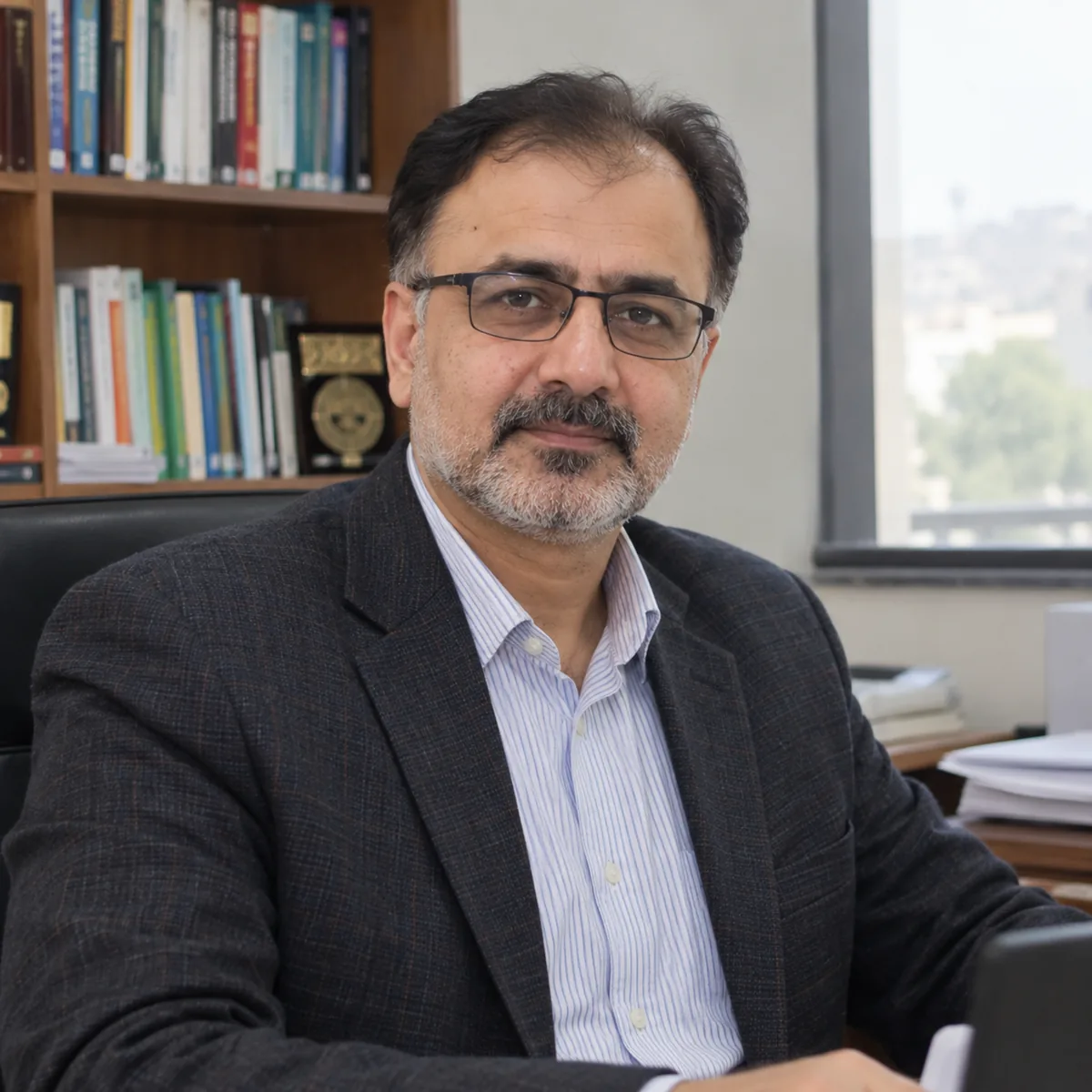
Prof. Farhan Raza is Professor and Chairman of the Department of Materials Engineering at NED University of Engineering and Technology, with a PhD in Materials Science and Engineering from the University of Sheffield.
His background spans metallurgy, materials engineering and materials science. Students can ask Quick Assignment Help about engineering materials, metallurgy and materials processing support.
- Current role
- Professor & Chairman, Materials Engineering
- Institution
- NED University of Engineering and Technology
- Qualification
- PhD, University of Sheffield
- Focus
- Materials Science, Metallurgy, Materials Processing
About Prof. Farhan Raza
Prof. Farhan Raza is a materials engineering academic. He earned a PhD in Materials Science and Engineering at the University of Sheffield (2012 to 2016), an ME in Materials Engineering at NED University of Engineering and Technology (2007 to 2009) and a BE in Metallurgy at Mehran University of Engineering and Technology (1999 to 2003).
At NED University he moved from Associate Professor (August 2020) to Professor (January 2022), and has chaired the Department of Materials Engineering since September 2020.
Students of engineering, metallurgy and manufacturing ask our team about material properties, phase diagrams, heat treatment and corrosion, which sit at the core of his field.
Academic Qualifications
Education history listed on this profile.
| Qualification | Institution | Period |
|---|---|---|
| PhD, Materials Science and Engineering | University of Sheffield | 2012 – 2016 |
| ME, Materials Engineering | NED University of Engineering and Technology | 2007 – 2009 |
| BE, Metallurgy | Mehran University of Engineering and Technology | 1999 – 2003 |
Profile details are based on information supplied by the expert. Availability for a specific request is confirmed by our team.
Professional Experience
Professor
Senior academic in the Department of Materials Engineering.
Chairman, Department of Materials Engineering
Academic and administrative leadership of the department, held alongside his professorship.
Associate Professor
Teaching and academic work before promotion to Professor.
Main Areas of Academic Expertise
Subject areas drawn from this profile.
Materials Science
How atomic structure and bonding determine what a material can do.
Materials Engineering
Selecting, designing and processing materials for real engineering uses.
Metallurgy
Extraction, processing and behaviour of metals and alloys.
Engineering Materials
Metals, ceramics, polymers, composites and semiconductors.
Material Properties
Strength, hardness, ductility, toughness and how they are measured.
Materials Processing
Casting, forming, welding and heat treatment.
Core Topics in Materials Science and Engineering
Most course content links structure to properties and properties to performance.
| Topic | What students study | Why it matters |
|---|---|---|
| Atomic structure and bonding | Atomic arrangement and bond types | Foundation of material behaviour |
| Crystal structures | Lattices such as FCC, BCC and HCP | Links structure to properties |
| Mechanical properties | Strength, hardness, ductility, toughness | Predicts performance under load |
| Phase diagrams | Phases, compositions and transformations | Guides alloy design and processing |
| Heat treatment | Annealing, quenching, tempering | Changes properties without changing shape |
| Corrosion | Degradation and environmental interaction | Determines durability and protection |
Main Groups of Engineering Materials
Materials are usually grouped by structure and bonding.
Metals
Strong and conductive, used in structures, machinery and wiring.
Alloys
Metals combined to improve strength, corrosion resistance or other properties.
Ceramics
Hard, heat-resistant and brittle, used in tiles, insulators and cutting tools.
Polymers
Lightweight and easily shaped, used in packaging, pipes and components.
Composites
Two or more materials combined for high strength-to-weight performance.
Semiconductors
Materials with controllable conductivity that underpin electronics.
Metallurgy and Processing
Processing route changes microstructure, and microstructure changes properties.
| Process | Explanation | Learning aim |
|---|---|---|
| Metal casting | Pouring molten metal into moulds to make components | Basic metal shaping |
| Heat treatment | Controlled heating and cooling to modify properties | How structure responds to temperature |
| Metal forming | Changing shape through mechanical deformation | Deformation and manufacturing |
| Welding | Joining materials permanently | Joining methods and their effects |
| Corrosion control | Reducing degradation from the environment | Durability and protection |
Where Materials Engineering Is Applied
Materials choices shape almost every engineering sector.
Aerospace
Lightweight, high-strength alloys and composites.
Automotive
Steels, aluminium alloys and polymers for safety and efficiency.
Construction
Concrete, steel and protective coatings.
Energy systems
Materials that withstand heat, stress and corrosion.
Manufacturing
Processing routes that control quality and cost.
Electronics
Semiconductors and conductive materials.
How Quick Assignment Help Supports Materials and Metallurgy Students
Share your topic and requirements with our team to find out what support is available.
Concept explanations
Clear explanations of structure, properties, phase diagrams and processing.
Research and lab reports
Help organising methods, data interpretation and discussion for lab and project work.
Feedback and referencing
Feedback on technical clarity, structure and referencing.
Materials are research-based reference work to support learning. Follow your institution’s academic integrity policy, acknowledge sources and adapt any material to its requirements.
Questions About Prof. Farhan Raza
Short answers about this profile and the subject area.
Who is Prof. Farhan Raza?
Prof. Farhan Raza is Professor and Chairman of the Department of Materials Engineering at NED University of Engineering and Technology, specialising in Materials Science, Materials Engineering and Metallurgy.
What are Prof. Farhan Raza's qualifications?
His profile lists a PhD in Materials Science and Engineering from the University of Sheffield (2012 to 2016), an ME in Materials Engineering from NED University (2007 to 2009) and a BE in Metallurgy from Mehran University of Engineering and Technology (1999 to 2003).
Where did he complete his PhD?
He completed his PhD in Materials Science and Engineering at the University of Sheffield between 2012 and 2016.
Where has he worked?
His profile lists NED University of Engineering and Technology, where he has been Associate Professor, Professor and Chairman of the Department of Materials Engineering.
What is Materials Science and Engineering?
Materials Science and Engineering studies how the structure of materials relates to their properties, processing and performance, and uses that knowledge to select or design materials for engineering applications.
What is the difference between Materials Engineering and Metallurgy?
Metallurgy focuses on metals and alloys, from extraction to processing and behaviour. Materials Engineering is wider and also covers ceramics, polymers, composites and semiconductors.
What does a Chairman of an engineering department do?
A department Chairman provides academic and administrative leadership, covering curriculum, faculty coordination and departmental operations. Exact duties vary by university.
What is included with Quick Assignment Help support?
Every project includes a free plagiarism report and AI report, plus unlimited revisions until you are satisfied, according to your requirements. Materials are reference work to be adapted to your university’s rules.
How do I ask about Materials Engineering or Metallurgy support?
Message us on WhatsApp with your topic, level, any data or lab brief and your deadline. Our team reviews the brief and confirms the right support and a quote before you decide.
Explore More
Other academic experts
Quick Assignment Help services
Need Help With Materials Science or Metallurgy?
Share your topic, course level, any lab or simulation data and your deadline. Our team will review your brief and confirm the right support before you decide.
Chat With Our Team on WhatsApp